When is golden hour and blue hour
Everyone says to shoot in golden hour. Ask when to leave, how long you'll get, or whether tonight is worth the drive, and the answers go vague. Both windows are sun angles, not clock times. Once you have that, the rest is arithmetic.
1. How the two windows are defined
Everything is keyed to solar elevation, the angle of the sun's centre above (positive) or below (negative) the horizon:

| Window | Solar elevation | What you see |
|---|---|---|
| Golden hour | −4° to +6° | Low warm light, long shadows, gentle contrast, faces hold detail |
| Blue hour | −4° to −6° | Sky goes deep blue and roughly matches city lights, so both expose together |
| Civil twilight | 0° to −6° | The last of the light you can still see outdoors by |
| Nautical twilight | −6° to −12° | Horizon still visible, sky nearly dark |
| Astronomical twilight | −12° to −18° | Full darkness only past −18°, which is where Milky Way work starts |
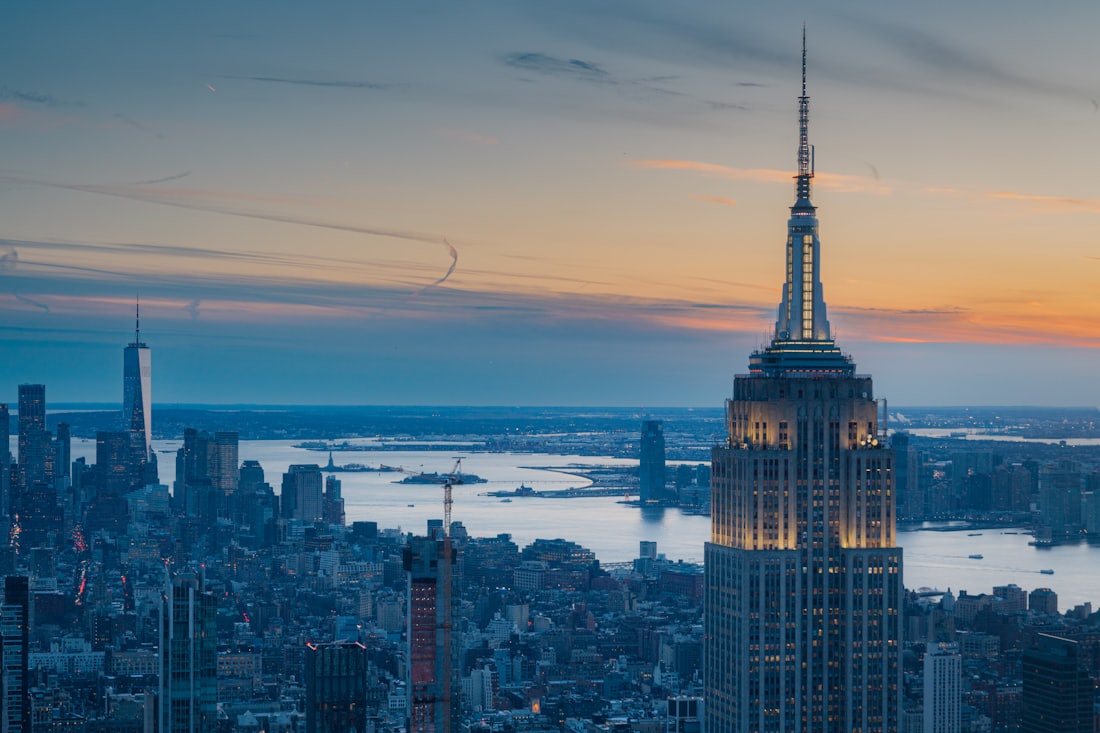
Golden and blue hour overlap between −4° and −6°: last orange on the horizon, sky overhead already blue. Most people are after those few minutes.
2. How long you get: latitude and season
How long the sun takes to cross a band of elevation depends on how steep its path is. Near the equator it drops almost straight down; further away, the path flattens and everything stretches out.
| Latitude | Example | Golden hour length (near the equinoxes) |
|---|---|---|
| ~20° | Honolulu, Hanoi | about 45 min |
| ~35° | Tokyo, Los Angeles | about 50 min |
| ~45° | Milan, Montreal | about 55–60 min |
| ~55° | Copenhagen, Edinburgh | about 70 min, far more in winter |
Season matters too. The window is longer around the solstices, when the sun meets the horizon at a shallower angle. At 45° that's ten-plus extra minutes in midwinter.
Use the table for scale, not scheduling.
LCT computes sunrise, sunset and twilight for your place and date, with weather on top.
About LCT3. Working out today's times where you are
You need three inputs:
- Exact coordinates, not a city name. Sunset varies by minutes across one metro area, and by far more between a coastline and a valley.
- Today's date. Sunrise and sunset move every day; last week's times are already off.
- Your real horizon, the one people skip. Published sunset times assume an ideal flat horizon. Mountains to the west can steal 15–30 minutes; a high vantage point or open water gives you extra.
With those three, solar elevation can be computed exactly. LCT does that: sunrise, sunset and each twilight boundary for a place and date, with weather and cloud cover alongside, so "is tonight worth it" isn't guesswork.
Which forecast numbers matter (cloud cover, cloud base, visibility) gets its own page on the LCT site: what weather to check and how to read a forecast. For finding the spot, see working a spot back out of maps and other people's pictures.
4. What each window is good for
Golden hour
- For portraits, low warm light flatters a face straight on; backlit with a little fill, hair gets a rim of light.
- For landscapes, side light pulls texture out of ridgelines, dunes and furrows in a way midday can't.
- Watch the exposure drift. Light falls off fast as the sun drops; settings from five minutes ago will be under. Keep checking the histogram.
Blue hour
- For cities and architecture, it's the one time of day when sky and artificial light roughly balance, so one frame holds both without HDR.
- For long exposures, the light is low enough for multi-second frames, and water and cloud smooth out.
- It's short: about ten minutes at mid latitudes, changing the whole time. Be set up before it starts.
To keep the settings on the frame itself, see EXIF watermarks. With the camera on a tripod out of reach, phone control saves the walking.
5. FAQ
What time is golden hour?
There's no fixed time. It's defined by solar elevation, −4° to +6°, once after sunrise and once before sunset, so the clock time depends on the date and where you are.
How long after sunset is blue hour?
Straight after golden hour, with the sun 4° to 6° below the horizon. At mid latitudes that's roughly 15 to 30 minutes after sunset; the window itself lasts about ten minutes, longer the further you are from the equator.
Why does it differ so much between cities?
Longitude shifts the clock time of sunset within a time zone, and latitude changes how steeply the sun crosses the horizon. The two compound, which is why high-latitude summer evenings stay light so late.
Is there golden hour on an overcast day?
The angle is still there, but heavy cloud scatters the warm directional light. Thin cloud, or a gap near the western horizon, often beats a clear sky. Look at cloud cover and cloud height rather than the forecast icon.
How late do I need to wait to shoot the Milky Way?
Until the sun is below −18°, the end of astronomical twilight: typically 90 minutes to two-plus hours after sunset at mid latitudes, later in summer, and never in a high-latitude midsummer. Keep the moon out of it too; a full moon washes out the core.