Composition basics
Everything made it into the frame and nothing stands out. That is the classic composition problem, and the fix is a handful of decisions you can check in five seconds before you press the shutter: where the subject sits, how the eye gets in, which side stays empty, and what is creeping in at the edges.
1. Thirds are a starting point
Split the frame into thirds both ways and you get four lines and four intersections. Put the subject on a line or an intersection and the picture usually gets better: off-centre, the subject has somewhere to face, while dead centre is the most static spot there is.

- For portraits, put the eyes near the upper line instead of centring the whole person. People look at eyes first.
- For landscapes, good clouds mean a horizon on the lower third, an interesting foreground means the upper third. Just not the middle, where neither half gets any weight.
- For architecture and still life, line the main vertical up with a vertical third and the frame tidies itself up.
Every camera and phone can show a thirds grid. Leave it on for a couple of weeks, then switch it off.
2. Leading lines and diagonals
Roads, railings, rivers, long shadows and rows of lamp posts all pull the eye along. Two rules make them work.
- Bring the line in from an edge, ideally a bottom corner. It then feels like it starts at the viewer's feet.
- Aim it at the subject, not at empty space. A line that runs off the border with nothing at the end walks the viewer out of the picture.
Horizontals and verticals are calm; one diagonal gives a still frame some speed. Wide lenses stretch whatever is close, which makes these lines easy to find. More in choosing a focal length.
paida turns one reference photo into a skeleton outline and a one-line cue in the viewfinder, so whoever is shooting just lines it up; the shutter fires by itself. Android beta.
About paida3. Negative space gives direction
- Leave room on the side they face. Someone looking left belongs on the right. Flip it and they look jammed against the border.
- Give movement somewhere to go. A runner or a car needs more space ahead than behind.
- Sometimes the space is the subject. A small figure in snow, fog or against a plain wall looks lonelier the more emptiness surrounds them. Resist adding anything else.
4. Foreground makes depth
A photo is flat. Depth has to be built, and a foreground is the best tool for it.
- Crouch. Landscapes shot from standing height come back distant and flat. Drop half a metre and the rocks, flowers and railings at your feet come into the frame.
- Make the foreground relate to the subject. A random rock in front of the lens is just in the way. A foreground should lead toward the subject or tell you where you are.
- To keep both sharp, stop down to f/8–f/11 and focus as described in aperture and depth of field.
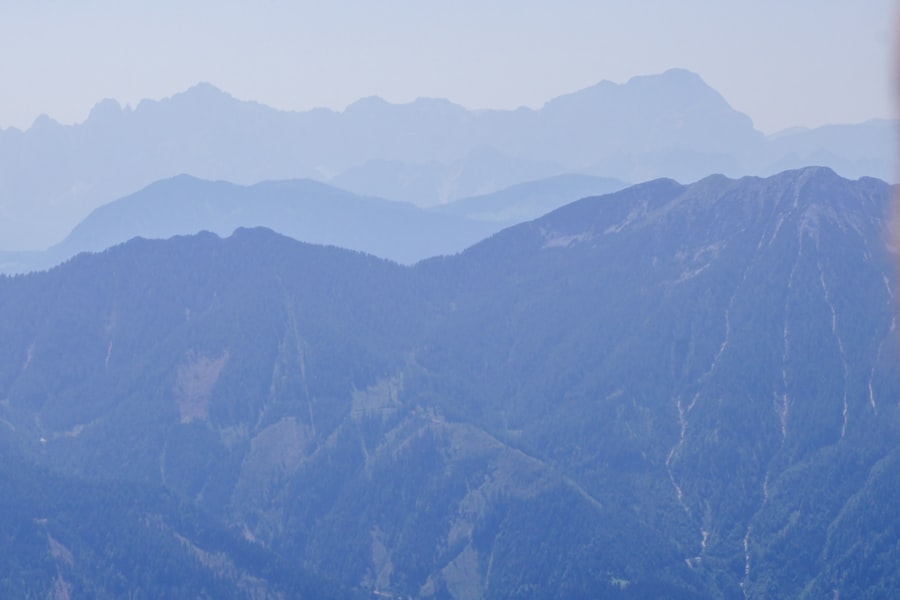
- Layers count too. A near tree, rooftops in the middle, ridges far off: three planes make space, and atmospheric haze pales the far one for you.
5. Horizons and verticals
The dullest rule, and the one everybody notices: a sea or lake horizon one degree off is obvious, because everyone knows water lies flat.
- Turn on the electronic level. It beats your eye.
- Tilt a wide lens up at a building and the walls lean in. Step back and use a longer focal length, or fix the perspective in editing.
- Straightening in post crops off a border, so leave a little margin around the subject.
6. When to break the rules
Every rule above has exceptions. Just know which one you're breaking.
- A facade, a reflection or a long corridor is symmetrical and belongs dead centre.
- In a minimal frame with a single element, the stillness of the centre is the point.
- Repeating patterns like windows, crowds and shelves run on rhythm, so placement matters less.
- In documentary work the moment won't wait. Get the shot and fix the framing later; the frame you missed is the one you'll regret.
The five-second check: Which line is the subject on? How does the eye get in? Is there room on the side it faces? Is there a foreground? Is the horizon level? Is anything creeping in at the edges? Answer those on location and most composition problems never make it home.
7. FAQ
Do I need the thirds grid switched on?
Turn it on at first; it makes you notice where the subject sits. Once the habit sticks, switch it off. The grid only ever existed to make you think for two seconds before the shutter.
Is cropping afterwards cheating?
No. But cropping costs pixels, cutting out something at the edge usually changes the composition too, and a badly tilted horizon loses a wide border when you straighten it. Fix what you can while framing and keep cropping for repairs.
When should I shoot vertically?
When the subject is vertical, like a person, a tree or a tower, or when you want to stress height and depth. Phone screens are vertical too, so a vertical frame fills more of a social feed. Not sure? Shoot both and choose later.
Why do my photos feel busy but pointless?
Usually one of three things. You stood too far back and the subject is tiny; the frame holds three or four things you wanted to say; or a cluttered background swallows the subject. Move closer, drop two elements, or change your angle until the background calms down.