The exposure triangle: aperture, shutter speed and ISO
The exposure triangle is aperture, shutter speed and ISO. All three change brightness, and each charges a different price: aperture costs depth of field, shutter speed changes how motion looks, ISO adds noise. Picking settings means picking which price this frame can afford.
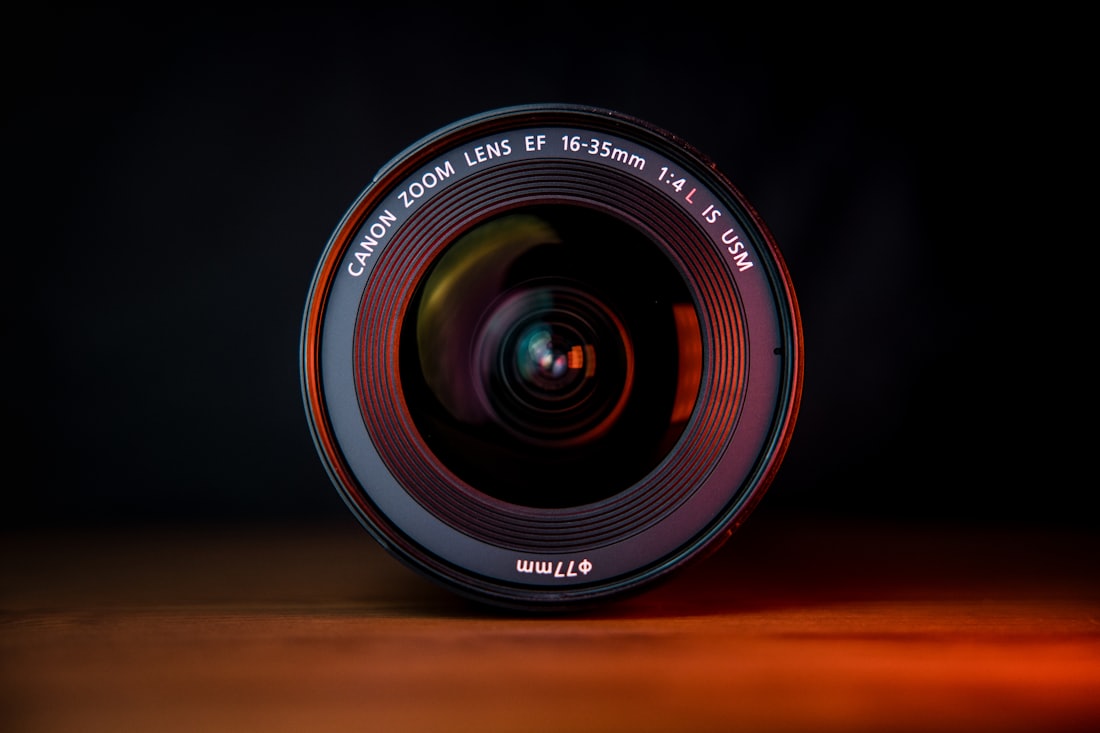
1. What the exposure triangle is
The exposure triangle puts the three settings that control brightness, aperture, shutter speed and ISO, on the corners of a triangle: move one, and at least one of the others has to move back.
You'll also see it called the ISO triangle, the aperture triangle, the shutter speed triangle, the aperture shutter speed ISO triangle or the triangle of exposure. Same idea. First the stop, the unit all three share, then one corner at a time.
2. First, what a "stop" is
A stop is double or half the light. All three settings move in stops, so you can trade one against another:

- Shutter 1/125s → 1/60s: twice the time, one stop more
- ISO 200 → 400: twice the gain, one stop more
- Aperture f/2.8 → f/2: twice the area, one stop more (f-numbers step by √2, 1.4 / 2 / 2.8 / 4 / 5.6 / 8, which is why the sequence looks odd)
One stop slower shutter plus one stop lower ISO: same brightness, different side effects.
Side by side, the three make the whole-stop chart below. Each step right is one stop more light, which is why the aperture row looks backwards: small opening to big.
| Control | ← one stop less whole stops one stop more → |
|---|---|
| Aperture f/ | 22 · 16 · 11 · 8 · 5.6 · 4 · 2.8 · 2 · 1.4 |
| Shutter (s) | 1/1000 · 1/500 · 1/250 · 1/125 · 1/60 · 1/30 · 1/15 · 1/8 · 1/4 |
| ISO | 100 · 200 · 400 · 800 · 1600 · 3200 · 6400 · 12800 · 25600 |
The aperture and shutter rows are marked values: f/11 is really 11.31 and 1/60 is really 1/62.5, rounded so they read better. The error is under a third of a stop. Most bodies adjust in third stops, so there are two more settings between each pair of cells.
Mark adds the settings strip right in your browser. Free, no account, nothing uploaded.
Open Mark — try one for free3. What aperture, shutter speed and ISO each do
Aperture is the opening in the lens, given as an f-number (focal length ÷ opening diameter). Stop down one stop and half the light gets through, and depth of field grows. Shutter speed is how long the sensor sees light; halve it for half the light and harder-frozen motion. ISO changes no light at all. It's gain applied after readout, so each doubling brightens the frame a stop and raises noise with it.
| Control | Main effect | One stop is… | Cost |
|---|---|---|---|
| Aperture f/ | Depth of field: smaller number, more blur | f-number ×√2 (f/2 → f/2.8) | Wide open, focus is razor thin and easy to miss; edges soften |
| Shutter | Freezing or stretching motion | time ×2 (1/125s → 1/60s) | Too slow blurs from shake or subject movement; too fast forces the other two to compensate |
| ISO | Signal gain | number ×2 (ISO 200 → 400) | More noise, less latitude, weaker colour as it climbs |
4. The exposure triangle formula: EV = log2(N²/t)
The formula behind the triangle is exposure value (EV):
EV = log2(N² / t), where N is the f-number,
t is the shutter time in seconds, and the reference is ISO 100.
Each +1 EV is one stop less light. Any two pairs of N and t with the same EV
let in the same light. Three worked examples:
| Scene and settings | Substituting | EV at ISO 100 |
|---|---|---|
| Bright sun, f/16 at 1/125s | log2(16² ÷ (1/125)) = log2(256 × 125) = log2 32000 | 14.97 ≈ EV 15 |
| Thin cloud or open shade, f/8 at 1/250s | log2(8² × 250) = log2 16000 | 13.97 ≈ EV 14 |
| Domestic room light, f/2.8 at 1/60s | log2(2.8² × 60) ≈ log2(8 × 60) = log2 480 | 8.91 ≈ EV 9 |
The third row uses 8, not 7.84, because marked f-numbers are rounded from a √2 series: f/2.8 is really 2√2 = 2.828, which squares to exactly 8. Square 1.4 / 2 / 2.8 / 4 / 5.6 / 8 / 11 / 16 and you get 2 / 4 / 8 / 16 / 32 / 64 / 128 / 256, doubling every step. That doubling is the stop.
ISO isn't in the formula; it decides which EV a scene needs. Each doubling moves the usable EV up a stop: a room that's right at EV 9 on ISO 100 wants EV 11 at ISO 400.
5. Equivalent exposure chart
Fix the EV and you get settings with identical brightness and different everything else:
equivalent exposure. The chart is EV 12 at ISO 100, so
N² / t = 2¹² = 4096 and t = N² ÷ 4096:
| Aperture | Shutter (computed) | On the dial | ISO | What changes |
|---|---|---|---|---|
| f/2.8 | 8 ÷ 4096 = 1/512 s | 1/500s | 100 | Most background blur, fastest shutter, safest hand-held |
| f/4 | 16 ÷ 4096 = 1/256 s | 1/250s | 100 | Blur and shutter margin both still in hand |
| f/5.6 | 32 ÷ 4096 = 1/128 s | 1/125s | 100 | Near most lenses' sharpest range, depth of field adequate |
| f/8 | 64 ÷ 4096 = 1/64 s | 1/60s | 100 | Deepest field, but 1/60s is the edge of hand-holding |
Same brightness on every row, four different photographs. The rule: open up a stop, shorten the shutter a stop.
ISO can join in. ISO 100 to 400 is +2 stops, so the f/8 row's 1/60s becomes 1/250s (1/60 → 1/125 → 1/250). That's f/8, 1/250s, ISO 400: deep focus, fast shutter, paid for in noise.
6. Which to fix first
Don't juggle all three. Start from what this frame can't compromise on:
- Is something moving? Set the shutter first. A running child needs 1/500s or faster, a bird in flight 1/1000s, silky water 1/4s or slower.
- Do you want blur, or everything sharp? Set the aperture first. f/1.8–f/2.8 for a single portrait, f/5.6 or smaller for a group, f/8–f/11 for a deep landscape.
- Still too dark? Only now raise ISO, and only as far as you need.
That's what A/Av (aperture priority) and S/Tv (shutter priority) are for: lock the one you care about and let the meter handle the rest.
7. Worked examples
| Situation | Starting point | Protect |
|---|---|---|
| Daylight portrait | f/2, 1/500s, ISO 100 | Aperture, to lose the background |
| Indoor group shot | f/5.6, 1/125s, ISO 1600 | Aperture, so everyone is sharp |
| Silky water | f/11, 1/2s, ISO 100 (tripod) | Shutter, slow enough to draw lines |
| Kids indoors | f/1.8, 1/250s, ISO 3200 | Shutter; noise beats blur |
| City at night | f/8, 8s, ISO 100 (tripod) | ISO, kept at base for quality |
To keep those numbers on the finished frame, add an EXIF watermark. They're already recorded in the file.
8. Common misconceptions
- "The triangle shape means something physical." It doesn't. Only aperture and shutter change the light entering the camera; ISO changes gain after readout. The triangle is a sticky note.
- "Equivalent exposure means an equivalent picture." No. The four rows above match in brightness and differ in depth of field, motion and noise.
- "Raising ISO is like finding more light." It isn't. ISO amplifies what's there, noise and all, so high-ISO frames look grittier and flatter.
- "Put everything on auto and stop thinking." The meter only knows bright from dark. It'll make the trade-off for you without asking which one you wanted.
- "Safe shutter speed is the fourth corner." It's a floor under the shutter when you hand-hold, an outside constraint rather than part of the triangle.
Keep reading: aperture and depth of field opens up the first corner, safe shutter speed sets the floor under the second, ISO and noise prices the third, and reading a histogram tells you whether a given combination worked.
9. FAQ
What is the exposure triangle?
A way of picturing three camera settings, aperture, shutter speed and ISO, on the corners of one triangle. All three change how bright the photo is, and each charges a different price: aperture changes depth of field, shutter speed changes how motion looks, ISO changes noise. It's a memory aid, not a law of physics.
What is the ISO triangle? What about the aperture triangle and the shutter speed triangle?
All the same thing under different names, depending on which corner someone mentions first. "Aperture shutter speed ISO triangle" and "triangle of exposure" mean the same again.
What is the triangle of exposure?
Same thing, words in a different order. Both name the relationship between aperture, shutter speed and ISO: change one, and at least one of the other two has to move to keep the frame as bright as before.
Is there an exposure triangle formula?
Yes: EV = log2(N² / t), with N the f-number, t the shutter time in seconds and ISO 100 as the reference. f/8 at 1/250s gives log2(64 × 250) = log2 16000 ≈ 13.97, so EV 14. ISO isn't in the formula; it sets which EV a scene needs, one stop higher for every doubling.
Do I have to shoot manual to use the exposure triangle?
No. A/Av or S/Tv covers nearly everything: lock the setting that matters and let the camera work out the rest. Manual earns its place when the light is constant and every frame has to match, as in studio work or panoramas.
How high can I push ISO?
There's no universal number; it depends on the body and how big the picture will be seen. A phone screen forgives far more than a large print. Shoot your own series from ISO 800 to the top of the range, find the highest you can live with, and remember it.
Why does a smaller f-number let in more light?
Because the f-number is a ratio: focal length divided by the diameter of the opening. At f/2 the opening is half the focal length; at f/8 it's an eighth, which gives a sixteenth of the area.
What is the slowest shutter I can hand-hold?
The old rule is no slower than 1 ÷ equivalent focal length, so 1/50s on a 50mm lens. It dates from film and modest print sizes; on high-resolution digital, go one or two stops faster. Stabilisation buys several stops back. See the shutter speed guide.